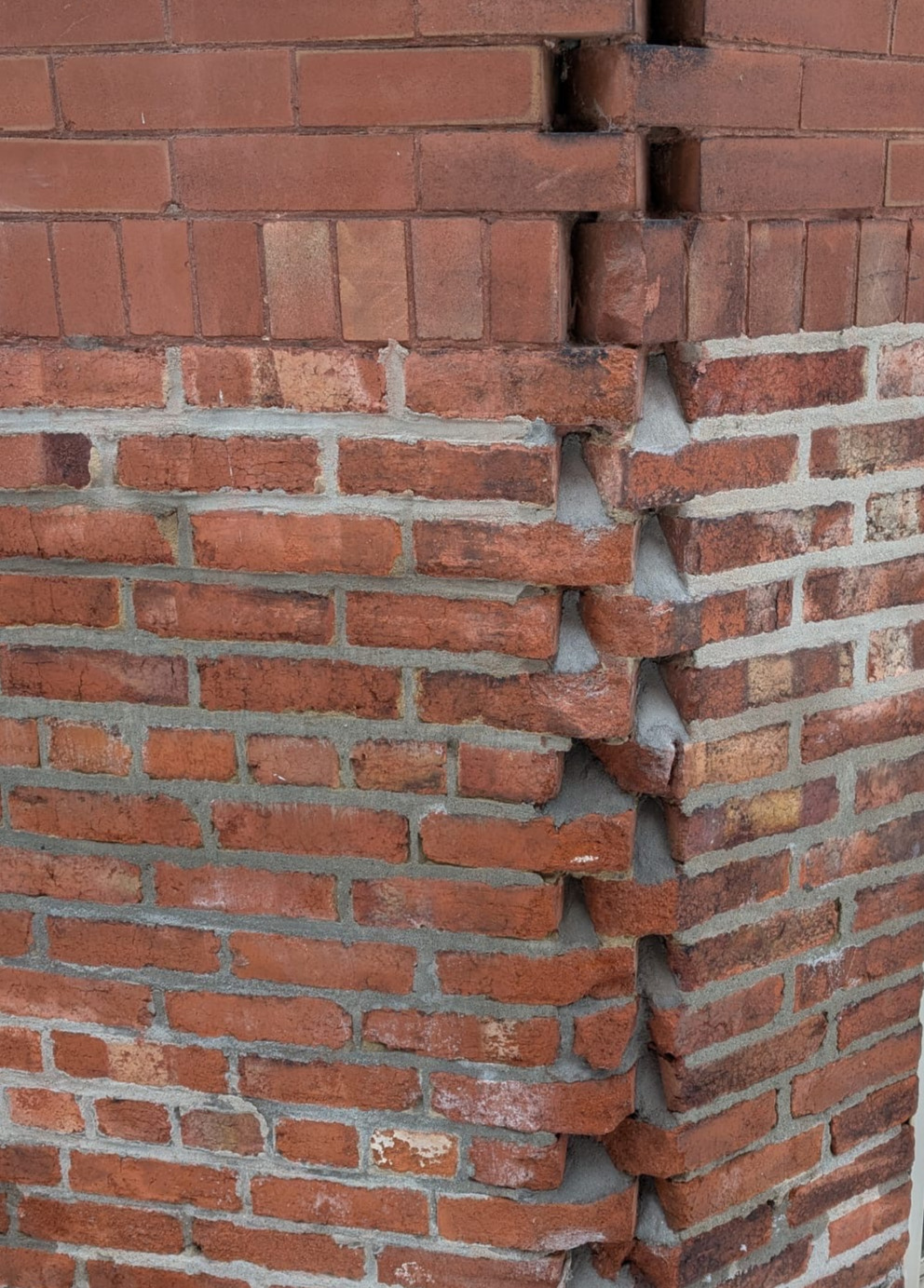
Many homeowners don’t realize that wet brick can significantly impact energy efficiency.
When brick absorbs moisture, it loses its ability to insulate properly — leading to increased heat loss and higher energy costs. This is why effective brick protection in Montreal is not only about structural preservation, but also performance.
Dry brick contains air pockets that help regulate temperature.
When moisture enters:
Wet brick is far more vulnerable to winter damage.
As temperatures drop, trapped moisture freezes and expands. To understand this process, see how freeze-thaw cycles damage brick.
The solution is preventing water from entering the brick.
Professional brick protection services use breathable treatments that:
Protecting your brick improves both durability and energy performance.
Book your free façade assessment today.
Not sure what your building needs?Get a clear recommendation before moisture damage becomes expensive.
Book a Free Façade Assessment


%20(2000%20x%20500%20px)%20(2).png)
.png)