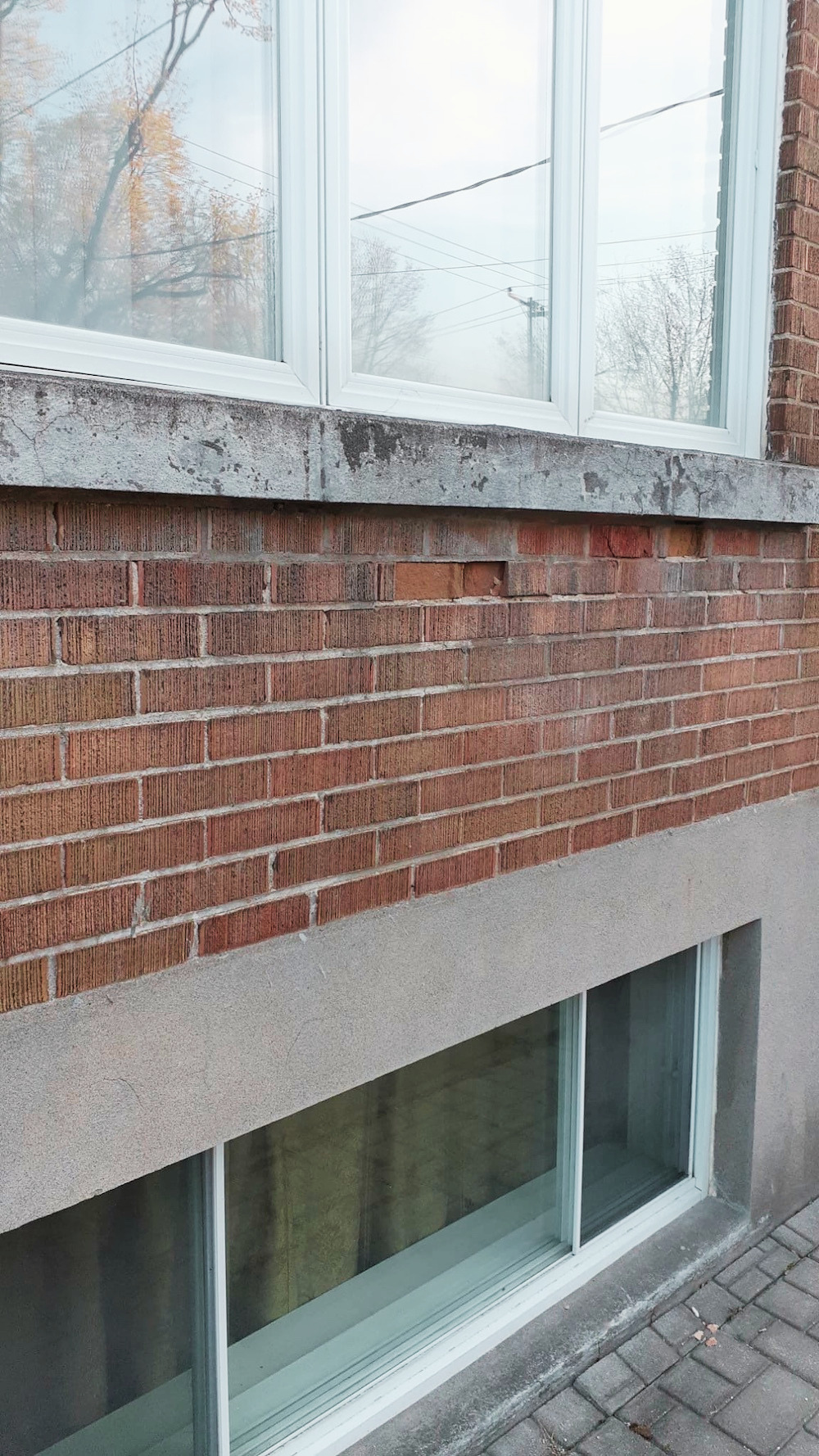
Brick is designed to handle exposure to the elements, but excessive moisture absorption over time can contribute to long-term masonry deterioration — especially in Montreal’s harsh climate.
Because Montreal experiences heavy rain, snow, humidity, and repeated freeze-thaw cycles, brick façades are constantly exposed to moisture throughout the year. When too much water enters the masonry system, deterioration can slowly begin beneath the surface before major damage becomes visible.
Understanding the early warning signs can help homeowners identify potential issues before costly repairs become necessary.
Brick and mortar are naturally porous materials, meaning they can absorb water over time. While some moisture movement is normal, excessive water penetration can become problematic when the masonry remains saturated for extended periods.
During winter, absorbed moisture may freeze and expand inside the brick and mortar. Over repeated freeze-thaw cycles, this expansion can gradually weaken the masonry surface and contribute to deterioration.
Long-term moisture exposure may contribute to:
- Surface wear
- Brick spalling
- Mortar joint deterioration
- Water staining
- Cracking
- Accelerated façade aging
This is why preventive masonry protection is especially important in climates like Montreal.
1. Darkened Brick After Rain
If sections of your brick façade remain visibly darker long after rainfall, this may indicate excessive moisture absorption.
Brick that stays wet for prolonged periods may be more vulnerable to freeze-thaw stress and long-term deterioration.
2. White Powder or Residue (Efflorescence)
White chalky residue appearing on brick surfaces is commonly known as efflorescence.
This occurs when water moves through masonry and leaves behind salt deposits as it evaporates. While not always structurally serious on its own, efflorescence can indicate ongoing moisture movement within the wall system.
3. Surface Flaking or Spalling
Spalling occurs when the surface of the brick begins to chip, flake, or break apart.
This is often associated with moisture exposure combined with freeze-thaw cycles. As trapped moisture freezes and expands, pressure can gradually damage the masonry surface.
4. Deteriorating Mortar Joints
Mortar joints are often one of the first areas to show signs of moisture-related deterioration.
Cracking, gaps, crumbling mortar, or missing sections may allow additional moisture penetration into the façade over time.
5. Moss or Organic Growth
Persistent moisture exposure can sometimes encourage moss, algae, or other organic growth on masonry surfaces.
This may suggest that portions of the façade are retaining excessive moisture.
6. Interior Moisture Issues Near Exterior Brick Walls
In some cases, excessive exterior moisture exposure may eventually contribute to interior humidity issues, staining, or water infiltration near masonry walls.
This can be especially important to monitor in older Montreal homes.
Montreal’s climate creates particularly difficult conditions for brick façades.
Buildings are exposed to:
- Snow accumulation
- Rain exposure
- Humidity
- Rapid temperature fluctuations
- Repeated freeze-thaw cycles
Over time, these conditions can accelerate masonry wear if excessive moisture absorption is not managed properly.
Older brick homes and duplex/triplex buildings are often especially vulnerable due to aging mortar joints and long-term environmental exposure.
Breathable masonry protection systems are designed to help reduce excessive water absorption while still allowing trapped moisture vapor to escape naturally from the wall system.
This type of breathable protection may help reduce long-term moisture exposure risks while preserving the natural function of the masonry.
Preventive protection is often most effective before significant deterioration occurs.
Moisture-related masonry deterioration often develops gradually over time. Identifying early warning signs and addressing moisture exposure proactively can help reduce the risk of larger restoration or repair projects later on.
For Montreal homeowners, preventive masonry protection can play an important role in preserving both the appearance and long-term durability of brick façades.
Boreal Masonry Protection provides breathable masonry protection solutions designed to help reduce moisture exposure and freeze-thaw deterioration in Montreal’s climate.
Book a Free Facade Assessment
Not sure what your building needs?Get a clear recommendation before moisture damage becomes expensive.
Book a Free Façade Assessment


%20(2000%20x%20500%20px)%20(2).png)
.png)