Mortar joints play a critical role in the long-term durability and stability of brick masonry systems.
Over time, exposure to moisture, freeze-thaw cycles, and environmental wear can gradually weaken mortar joints and contribute to masonry deterioration. Because mortar often deteriorates before the brick itself, identifying early warning signs is important for preserving the condition of older façades.
In Montreal, aging mortar joints are especially common on older homes, duplexes, triplexes, chimneys, and historic masonry buildings exposed to decades of harsh winter conditions.
Mortar joints are the visible lines of mortar located between bricks or masonry units.
These joints help:
- stabilize the masonry system
- support structural integrity
- manage moisture movement
- distribute environmental stress across the façade
Although bricks themselves can last for many decades, mortar joints naturally deteriorate over time due to constant weather exposure.
This is why masonry repointing eventually becomes necessary on many older buildings.
Mortar joints are continuously exposed to:
- rain
- snow
- humidity
- freeze-thaw cycles
- UV exposure
- long-term environmental aging
As moisture repeatedly enters the masonry system and temperatures fluctuate throughout Montreal winters, mortar joints gradually weaken and break down.
Over time, deteriorated mortar can allow additional water penetration into the façade, increasing the risk of further masonry damage.
1. Cracked Mortar
Visible cracking in mortar joints is one of the earliest warning signs of deterioration.
Cracks may begin small but can gradually expand as moisture and freeze-thaw stress continue affecting the masonry.
2. Crumbling or Powdery Mortar
If mortar becomes soft, sandy, or crumbles when touched, deterioration may already be progressing.
This can indicate long-term moisture exposure and aging within the masonry system.
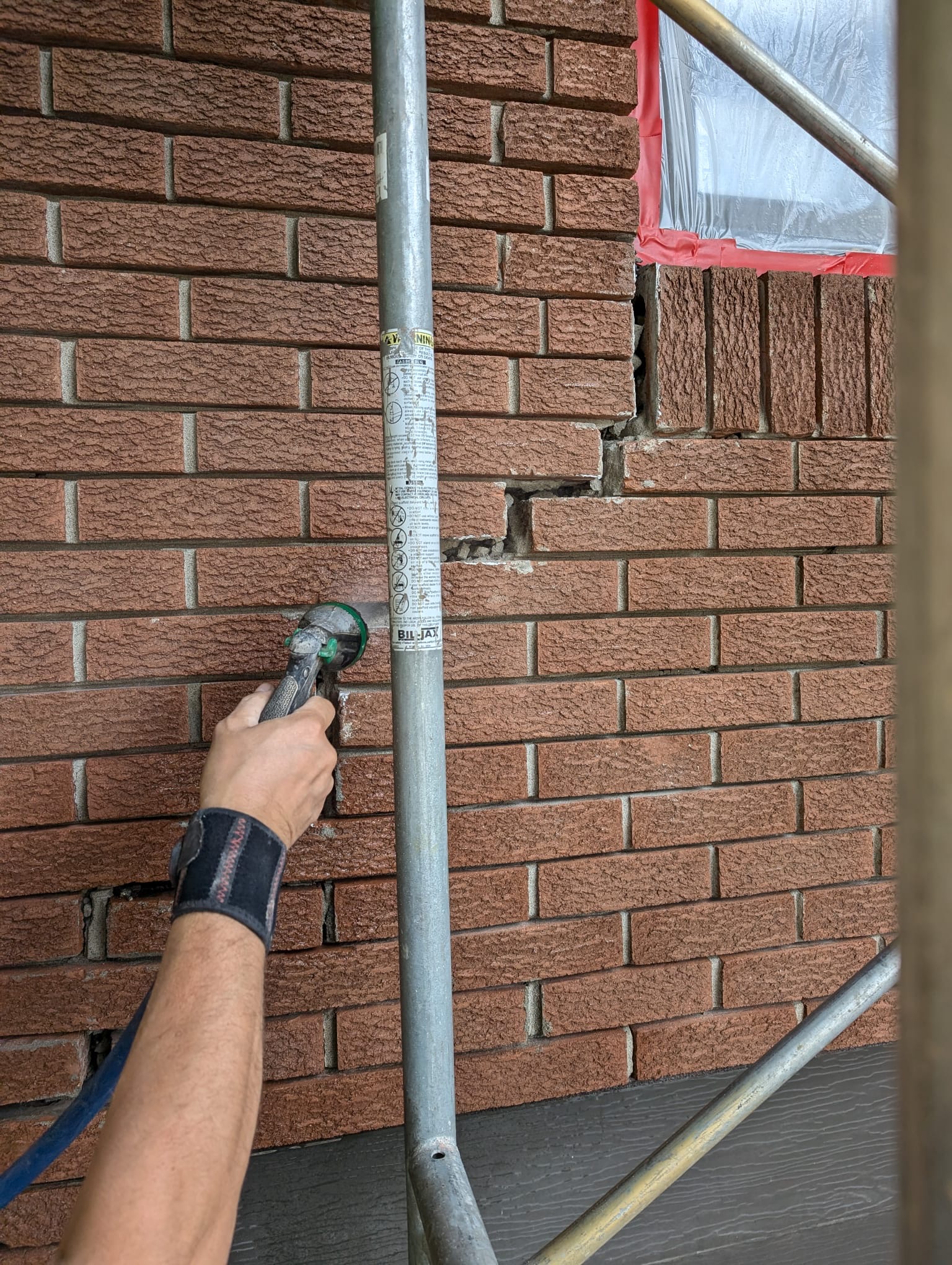
3. Missing Mortar Between Bricks
Gaps or missing sections of mortar may allow additional moisture penetration into the wall system.
These openings can gradually contribute to larger masonry deterioration issues if left untreated.
---
### 4. Loose or Shifting Bricks
As mortar joints weaken, bricks may begin losing stability or shifting slightly over time.
This can indicate that the masonry system is no longer being properly supported.
5. White Residue or Efflorescence
White powdery residue appearing on masonry surfaces is commonly known as efflorescence.
This occurs when moisture moves through the masonry system and leaves behind salt deposits as it evaporates.
While efflorescence itself is not always structurally serious, it often indicates ongoing moisture movement inside the wall system.
6. Brick Spalling Near Mortar Joints
Deteriorating mortar joints can contribute to increased moisture exposure around surrounding bricks.
Over time, this may increase the risk of brick spalling, surface flaking, and freeze-thaw deterioration.
Montreal’s climate creates especially difficult conditions for older masonry systems.
Buildings are exposed to:
- heavy snow
- rain
- humidity
- rapid temperature fluctuations
- repeated freeze-thaw cycles
Over decades, this environmental stress gradually weakens mortar joints and increases the need for masonry preservation and restoration work.
Older neighborhoods with aging brick architecture are particularly vulnerable.
Masonry repointing involves removing deteriorated mortar and replacing it with new mortar designed for the masonry system.
Repointing may help:
- restore joint integrity
- reduce moisture penetration
- preserve façade durability
- support long-term masonry performance
Addressing mortar deterioration early is often far less costly than waiting for larger masonry restoration issues to develop.
Breathable masonry protection systems are designed to help reduce excessive moisture absorption while still allowing trapped vapor to escape naturally from the wall system.
When combined with proper restoration approaches, preventive moisture protection can help support long-term masonry preservation.
Mortar deterioration often develops gradually over many years before becoming highly visible.
For Montreal property owners, identifying early warning signs and addressing masonry wear proactively can help preserve façade integrity and reduce long-term repair risks.
Not sure if your mortar joints may be deteriorating?
Boreal Masonry Protection provides preservation-focused masonry assessments, repointing guidance, and breathable masonry protection solutions designed for Montreal’s climate and older brick buildings.
Not sure what your building needs?Get a clear recommendation before moisture damage becomes expensive.
Book a Free Façade Assessment


%20(2000%20x%20500%20px)%20(2).png)
.png)